

Table of Contents
- What Separates Competition Singlets From Training Gear
- Fabric Technology That Makes the Best Performance Wrestling Singlets
- Best Moisture Wicking Wrestling Apparel for Hot Climates
- USA Wrestling Singlet Requirements and Competition Standards
- How to Choose a Wrestling Singlet Size for Any Body Type
- Performance Features: Mesh Panels, Leg Bands, and Ergonomic Design
- Sanitation, Layering, and Gear Maintenance Protocols
- Frequently Asked Questions
Last Updated: September 14, 2026
What Separates Competition Singlets From Training Gear
The best performance wrestling singlets for competition are engineered for tight compression, low friction, and rule compliance, while training gear prioritizes breathability and abuse tolerance over fit precision.
A singlet that sags during a takedown or bunches at the hips can cost you points on a technical violation, not just comfort.
Below, we break down the fabric specs, USA Wrestling requirements, sizing logic, and hygiene routines that separate tournament-ready gear from a basic practice suit.
Hawaiʻi Wrestling Gear empowers the local wrestling community by providing high-quality, performance-driven apparel designed for the rigors of training and competition.
Fabric Technology That Makes the Best Performance Wrestling Singlets
Three fabric properties decide whether a singlet performs under match pressure: stretch recovery, moisture movement, and seam integrity.
Four-Way Stretch, Elastane, and Polyester Blends
A four-way stretch polyester blend with elastane is the standard for competitive singlets: polyester provides abrasion resistance and colorfastness, while elastane lets the fabric recover its shape after every scramble (Polyester).
Look for enough elastane to snap back without losing compression over a season. Cheap singlets often use two-way stretch, which only flexes in one direction.
Flatlock Stitching and Abrasion Resistance
Flatlock stitching lies flat against the skin, so there's no raised seam to chafe, and it distributes stress across the seam line rather than concentrating it at stitch points where cheap singlets blow out first.
Check the crotch and shoulder seams. Those take the most load. If they're overlocked rather than flatlocked, the singlet won't survive a full season of takedowns.
Best Moisture Wicking Wrestling Apparel for Hot Climates
The best moisture wicking wrestling apparel moves sweat off the skin to the fabric surface, where it evaporates instead of pooling, the difference between staying dry and wrestling in a soaked suit.
Two features do the heavy lifting:
- Breathable mesh panels under the arms and along the back release trapped heat
- Hydrophilic polyester fibers pull moisture away from the body rather than absorbing it like cotton
Cotton holds water, gets heavy, and stays wet for hours. A polyester blend with mesh ventilation dries far faster and stays lightweight through a full tournament day.
For athletes training in humid island conditions, airflow matters as much as wicking. Prioritize singlets with mesh zones over solid-panel designs.
USA Wrestling Singlet Requirements and Competition Standards
USA Wrestling singlet requirements are enforced at weigh-ins and mat-side. A legal singlet must cover the torso as a one-piece garment, with no exposed midriff, and fit so it doesn't create a grabbing advantage for an opponent.
Always confirm the current season's rulebook through USA Wrestling's official rulebook and event standards, because fit and coverage rules are updated periodically.
What most athletes miss is the fit clause: too loose creates a handle an opponent can grip, too tight restricts breathing and movement. Tournament-ready means snug, not painted on.
How to Choose a Wrestling Singlet Size for Any Body Type
To choose a wrestling singlet size, measure chest, waist, and torso length, then compare against the manufacturer's size chart rather than your street-clothes size. Singlet sizing runs tight by design, so a medium t-shirt may translate to a large singlet for torso length.
How to Take the Three Measurements
Use a flexible cloth tape and measure over a t-shirt or compression layer, not bare skin or street clothes.
- Chest: Wrap the tape around the fullest part of the chest, under the arms, keeping it level front to back. Breathe normally; don't puff up.
- Waist: Measure at the natural waistline, roughly at the navel, not at the hip bone where pants sit.
- Torso length: Run the tape from the top of the shoulder, down over the chest, through the crotch, and back up to the starting shoulder. This is the measurement most buyers skip and the one that causes the most returns.
Write all three numbers down before opening any size chart. Manufacturers weight them differently, some size on chest, others on torso length, so one number rarely tells the whole story.
Reading a Size Chart Like a Fitter
Size charts list a range, not a single number. If your chest measures 38 inches and the chart shows Medium at 36-38 and Large at 39-41, you're at the top of Medium, usually right for a snug competition fit, but check torso length before committing.
| If your measurement is... | Choose... | Why |
|---|---|---|
| Between two sizes on chest | Size up | Room for shoulder rotation |
| Long torso, average chest | Size up | Prevents ride-up at the waist |
| Short torso, broad chest | Stay at size | Avoids excess fabric |
| Still growing (youth) | Size up slightly | Extends usable season |
| At the top of a range on chest but bottom on torso | Stay at size | Torso length drives fit more than chest |
The Two-Fit Test Before You Cut Tags
A singlet that passes the mirror check can still fail on the mat. Run two tests before committing to a size:
- The squat-and-reach test. Drop into a deep squat, then reach both arms overhead. The leg bands should stay put and the shoulders should not bind. If the fabric pulls hard across the back or the leg openings ride up past mid-thigh, size up.
- The shadow-sprawl test. From a referee's position, sprawl back and rotate your hips. If the crotch seam digs in or the torso fabric bunches into a fold an opponent could grab, the fit is wrong for competition.
The second test often catches problems the first misses, because it loads the seams the way a match does.
Men's, Youth, and Women's Fit Profiles
Fit profiles differ by category: men's singlets use a standard wrestler's cut with a higher leg opening, youth singlets scale down the torso and shorten the leg band, and women's singlets adjust bust and hip proportions with a different panel layout for coverage and comfort.
A common mistake is ordering a youth size for a small-framed teen. Check the youth size ceiling; once an athlete passes it, move to adult sizing even if the number looks large. Youth cuts run shorter in the torso, so a tall, growing athlete outgrows a youth size long before the chest measurement.
Performance Features: Mesh Panels, Leg Bands, and Ergonomic Design
Three performance features separate a good singlet from a great one: breathable mesh placement, no-slip leg bands, and ergonomic design that follows the body's movement lines. Each has a placement rule and a trade-off worth knowing.
Mesh Panel Placement and Why Location Beats Coverage
Mesh panels only help where heat actually escapes. The high-value zones are:
- Under the arms (axilla): the highest sweat-producing area on the torso during grappling
- Along the spine and upper back: where heat rises and gets trapped against the mat
- Behind the knees and inner thigh: where fabric stacks during scrambles
A large mesh panel across the chest looks breathable but does little, the chest isn't where heat concentrates. Small mesh zones in the right three places outperform it, so compare location, not total square inches.
The trade-off: mesh is less abrasion-resistant than solid knit. That is why good designs keep solid fabric over the shoulders, hips, and knees, the contact points, and reserve mesh for the non-contact zones. If a singlet is mesh everywhere, it will wear through faster at the seams that matter.
No-Slip Leg Bands: Gripper Systems Compared
No-slip leg bands use silicone or elastic grip strips to keep the leg opening in place during takedowns and scrambles. Without them, the leg rides up and you're adjusting mid-match.
There are two common systems, and they behave differently:
- Silicone print bands: a raised silicone pattern printed on the inner hem. Strong grip, but the print can wear off after a season of washing.
- Elastic grip strips: a woven elastic band with rubberized threads. Slightly less aggressive grip, but it survives more wash cycles.
A wide flat elastic hem with no gripper works for training but fails first in a scramble. For competition, pick a gripper system and check hem width, a wider band distributes pressure and reduces chafe on long tournament days.
Ergonomic Panel Construction
Ergonomic design means panels are cut to follow shoulder and hip rotation, so the fabric doesn't fight your movement. It shows up as:
- Raglan or set-in shoulder panels that let the arm rotate overhead without pulling the torso
- Gusseted crotch construction that adds a fabric panel so the seam doesn't split under a sprawl
- Curved side seams that follow the ribcage rather than running straight down
Spot ergonomic construction in a product photo by the side seam: a straight vertical seam from armpit to hem is a flat cut, while one curving inward at the waist and outward at the hip is body-mapped. The second costs more to make and performs better under load.
Sublimation, Colorfastness, and Rule Compliance
Dye-sublimation prints the design into the fabric rather than onto it, so graphics don't crack, peel, or add weight, important for team uniforms that must survive a full season.
There is a compliance angle here that most buyers miss. Competition rules govern what a singlet can look like on the mat, and graphics are part of that. Before you order a custom design, confirm two things with the current season's rulebook through USA Wrestling's official rulebook and event standards:
- Color and contrast requirements for the singlet body versus any trim or accent panels
- Whether any graphic, logo, or text placement is restricted at the level you compete at
A design that looks great in a mockup can be flagged at weigh-ins if it conflicts with the season's color or coverage standards, so check the rulebook before submitting a custom order.
Sanitation, Layering, and Gear Maintenance Protocols
A competition singlet is shared space for bacteria if you don't manage it. Skin infections spread fast in wrestling, and a damp singlet left in a bag overnight breeds them.
Build these habits into your routine:
- Wash the singlet after every use in cold water, then air dry
- Never leave a damp singlet in a gym bag
- Wash hands before and after handling gear
- Wipe down headgear and shoes separately
- Rotate two singlets during tournament weekends
For layering, most athletes wear a compression short or brief underneath rather than going bare, adding a moisture barrier and reducing chafe. Skip cotton underlayers; they hold sweat and defeat the singlet's wicking.
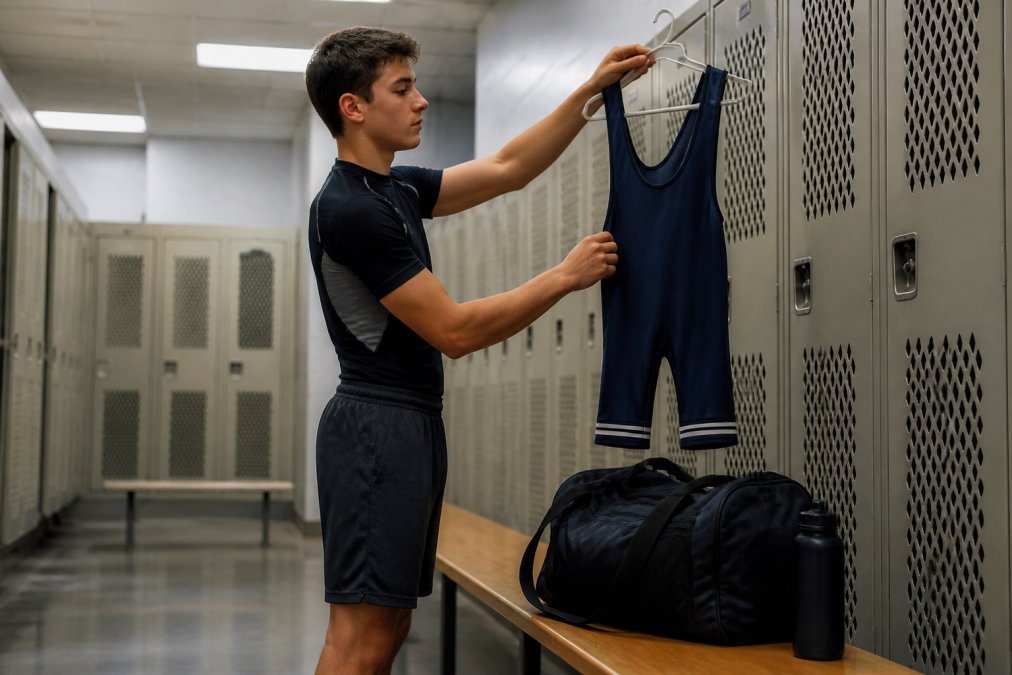
Anti-microbial fabric treatments help, but they don't replace washing. Treat them as a backup, not a substitute.
Finding gear that fits tight without restricting movement, breathes in humid conditions, and holds up through a full season is the real challenge for competitive wrestlers and their families. Hawaiʻi Wrestling Gear designs performance-driven singlets built for the rigors of training and competition, with breathable fabrics, durable construction, and a portion of every sale reinvested into local youth wrestling programs. If you want gear that performs on the mat and supports the community behind it, explore the full lineup and see the difference for yourself.
Frequently Asked Questions
What features should I look for in a competition wrestling singlet?
Prioritize four-way stretch fabric with elastane for freedom of movement, flatlock stitching to prevent mat burns, and moisture-wicking properties to stay dry through multiple matches. Look for no-slip leg bands that keep the singlet in place during takedowns and grappling. Breathable mesh panels help with airflow during long tournaments. USA Wrestling compliance matters for sanctioned events, so check the singlet meets uniform rules before buying. Durable fabric with abrasion resistance holds up through a full season of competition.
Are moisture-wicking materials necessary for wrestling singlets?
Yes, especially for athletes training in humid climates. Moisture-wicking fabrics pull sweat away from the skin and disperse it across the surface for faster evaporation. Without this, a singlet gets soaked and stays wet, which affects comfort and mat performance. Polyester blends with elastane offer the best combination of moisture management and stretch. Breathable mesh panels add ventilation in high-heat areas. For offseason training and multi-match tournaments, moisture-wicking wrestling apparel keeps athletes drier and more focused.
Do wrestling singlets need to be USA Wrestling compliant?
For sanctioned competition, yes. USA Wrestling sets uniform requirements that singlets must meet, including coverage standards and proper fit. A compliant singlet covers the torso fully and stays in place during competition. Check with your tournament organizer for specific rules, since requirements can vary by event level. Choosing a tournament-ready singlet that meets USA Wrestling singlet requirements avoids last-minute gear issues at weigh-ins. Most quality performance singlets are designed with these standards in mind.
How do I choose the right size for a wrestling singlet?
Measure your chest, waist, and torso length, then compare against the brand's size chart. Wrestling singlets should fit tight like a second skin without restricting movement or breathing. For youth wrestlers who are still growing, size up if between sizes but avoid a loose fit that can be grabbed during grappling. Compression fit is intentional, not uncomfortable. Trying on before a tournament gives you time to exchange if the fit profile is wrong.