

Table of Contents
- What to Look for When You Buy Performance Wrestling Gear Online
- How to Choose Wrestling Shoes for Grip and Fit
- Wrestling Singlet Sizing Guide: Getting the Fit Right
- Wrestling Gear Maintenance Tips for Long-Lasting Performance
- Top Picks for Performance Wrestling Gear Online
- Beginner vs. Advanced Gear: What Changes as You Improve
- Frequently Asked Questions
Last Updated: September 14, 2026
What to Look for When You Buy Performance Wrestling Gear Online
When you buy performance wrestling gear online, fabric composition and construction quality matter more than the logo on the chest. Performance wrestling gear uses moisture-wicking fabrics, reinforced stitching, and athletic cuts that move with the body. Performance wrestling gear uses moisture-wicking fabrics, reinforced stitching, and athletic cuts that move with the body.
The biggest mistake shoppers make is buying on looks alone. A singlet can look sharp in photos and still fail on the mat.
Fabric and Breathability for Humid Climates
Humidity is the silent killer of cheap wrestling gear. When sweat can't escape the fabric, it stays wet for hours, uncomfortable in practice and risky during tournaments with multiple matches in a day.
Look for 100% polyester or polyester-dominant blends, which dry fast and pull moisture away from skin. Cotton-heavy blends feel soft but soak up sweat and stay heavy. In warm, humid climates, lightweight polyester tees around 3.8 oz/yd² breathe better than cotton (Polyester).
Durability and Stitching That Survives a Season
Seams fail before fabric does. Shoulders, armpits, and hems take constant pulling, so double-needle stitching at side seams and hems is the baseline for gear that lasts.
What most guides miss is the print method. Direct-to-Film (DTF) prints hold color and detail through repeated washing. For gear you'll wear twice a week for six months, construction quality is not the place to save money.
How to Choose Wrestling Shoes for Grip and Fit
The best wrestling shoes fit snug, almost like a second skin, with no heel slippage during lateral movement. Measure your foot at the end of the day when it's largest, then size down half a size from your everyday sneaker. Shoes should feel tight but never painful.
Grip depends on sole compound and tread pattern. Flat, grippy soles work best on mats, while deeper treads suit varied flooring. Traction matters most when driving through a shot or defending a sprawl, a sliding shoe costs points.
For fit, focus on three checkpoints:
- Heel lock: no movement when you push off
- Toe room: about a thumb's width, no more
- Arch support: snug contact without pressure points
Break shoes in over two or three short sessions before competition; wearing them cold on match day leads to blisters and hesitation.
Wrestling Singlet Sizing Guide: Getting the Fit Right
The right singlet fits tight against the body with no loose fabric an opponent can grab, but never restricts range of motion or breathing. Most sizing problems come from two mistakes: measuring over street clothes and assuming singlet sizing tracks t-shirt sizing. A singlet is a compression garment, and its size chart is built around body measurements.
How to Measure Yourself Correctly
Measure over a thin base layer or bare skin, not over jeans or a hoodie. Use a flexible tailor's tape held snug but not compressing, and have someone else read the tape for chest and torso, self-measuring torso length is where most errors happen.
- Chest: Measure the widest point under the arms, keeping the tape level around the back.
- Waist: Measure at the natural waistline, roughly at the navel, not at the hips where pants sit.
- Torso length: Measure from the top of the shoulder, down the front, through the crotch, and back up to the starting shoulder point. This is the single most important number for singlet fit and the one most shoppers skip.
- Inseam: Measure from the crotch seam down the inside of the leg to mid-thigh, which is where most singlet legs end.
Write the numbers down and compare them to the manufacturer's chart, not your usual apparel size. If your chest lands in one size and your torso length in the next, size to the torso. A slightly loose chest can be layered over a compression shirt; a short torso will pull at the shoulders every time you raise your arms.
| Measurement | Where to Measure | Fit Goal |
|---|---|---|
| Chest | Widest point under arms, tape level | Snug, no gaping at the armholes |
| Waist | Natural waistline at the navel | Flat against skin, no roll-over |
| Torso | Shoulder, through crotch, back to shoulder | No pulling when arms raise overhead |
| Inseam | Crotch seam to mid-thigh | Mid-thigh coverage, no ride-up |
How Fabric Stretch Changes the Size You Should Buy
Singlet fit is also about how the fabric behaves. Most singlets use polyester/Lycra (spandex) blends, and the Lycra percentage determines how much the garment gives. Roughly 20% Lycra stretches noticeably and feels tight out of the bag before relaxing to the body. Lower Lycra content (around 10-15%) holds its shape but offers less give, so it must fit closer to your exact measurements from the start.
This matters most for athletes between sizes. High stretch makes sizing down usually safe because the garment conforms; low stretch makes sizing down risky across the chest and shoulders. When in doubt, check the product description for the Lycra or spandex percentage.
Youth Singlet Sizing: Growth, Not Guesswork
Youth wrestlers grow quickly and often need a singlet to last more than one season. If your child is between sizes, size up rather than down. A slightly loose singlet can be adjusted with a compression layer underneath, and the extra room buys a few more months of use. A singlet that is too tight restricts breathing and movement, a safety and performance issue, not just comfort.
A practical approach: measure at the start of the season, buy to the torso measurement, and re-measure at the midpoint. If the singlet pulls at the shoulders by mid-season, size up rather than stretch the current one.
Fit Check Before You Compete
Once the singlet arrives, do a five-minute fit test before stepping on the mat:
- Raise both arms overhead, the shoulders should not pull down or bind.
- Squat to a wrestling stance, the legs should not ride up past mid-thigh.
- Twist at the waist, the fabric should move with you, not bunch at the sides.
- Check the leg openings, they should sit flat, not cut into the thigh.
- Confirm no loose fabric at the chest or back that an opponent could grab.
If any fail, exchange for the next size before the season starts. A singlet that passes will stay in place through a full match and hold its shape through a season of washing.
Wrestling Gear Maintenance Tips for Long-Lasting Performance
Washing performance wrestling gear correctly doubles its usable life. Turn garments inside out, wash cold, and skip the dryer entirely. Heat breaks down elastic fibers and cracks printed graphics faster than anything else.
Mat hygiene matters as much as laundry. Gear picks up bacteria from mats, skin contact, and shared training spaces (the CDC). Wash after every practice, never let damp gear sit in a bag overnight, and air-dry in shade rather than direct sun.
A simple routine keeps gear competition-ready:
- Wash immediately after practice in cold water
- Use non-chlorine detergent, no fabric softener
- Air-dry flat or hang, never tumble dry
- Inspect seams monthly for early fraying
- Rotate two or three training shirts to reduce wear on any single piece
Printed graphics fade from dryer heat, not washing. Air-drying alone can add months to a favorite shirt's life.
Top Picks for Performance Wrestling Gear Online
Hawaiʻi Wrestling Gear builds apparel for athletes training in heat and humidity, and a portion of every sale goes back into local youth wrestling programs. Below are the standout pieces from the current lineup.
Training Tees and Singlets
The Islands T Dry Fit ($24.99) is a 100% polyester training shirt at 3.8 oz/yd², built for breathability in hot-weather practices. Double-needle hems and side seams hold shape through repeated washing, and the DTF front-and-back print stays crisp.

For a lighter everyday option, the Hawaii Wrestling T-Shirt 50/50 Blend ($19.99) uses DryBlend® moisture-wicking fabric with a taped neck and shoulders. It's the most affordable entry point into the lineup and works well as a practice rotation shirt.
The Faith Drives Passion Performance Tee ($24.99) adds UPF50 sun protection, useful for outdoor warm-ups and beachside training. The Process Hawaii Wrestling T-Shirt ($34.99) uses a medium-weight 5.5 oz/yd² DryBlend® knit that holds printed graphics through hard use.
Warm-Up and Outerwear Layers
The Island Quarter Zip ($42.00) is a 110 g/m² polyester pullover with a cadet collar for neck coverage and a reverse-coil zipper with a metal head. It layers over a tee for cool morning sessions and dries fast when the sun comes out.
For rain and travel, the Hawaii Wrestling Windbreaker Jacket ($49.99) uses an 85 g/m² polyester shell with 600 mm water resistance, elastic cuffs, and a mesh-lined three-panel hood. It packs down small enough to live in a gear bag.
Bags and Accessories for Practice and Travel
The 20L Enduro Backpack ($55.00) is built from 600D polyester with a water-repellent finish. A padded sleeve fits laptops up to 15", dual mesh side pockets hold water bottles, and a fleece-lined pocket protects eyewear or earbuds. For students balancing practice with school, it carries everything without falling apart.
Beginner vs. Advanced Gear: What Changes as You Improve
Beginners need breathable basics that fit well and survive frequent washing. Advanced wrestlers need the same durability but start caring about weight, compression, and tournament performance. The difference is not budget, it is knowing which pieces to buy first and why.
A Starter Kit for First-Year Wrestlers
New wrestlers and their families often overbuy. The goal in year one is to cover the essentials, learn what you like, and avoid spending on gear you'll outgrow or replace. Here is a practical starter checklist:
- One well-fitted singlet, competition legal, measured to the torso, not guessed from t-shirt size.
- Two training shirts, moisture-wicking polyester, so one can wash while the other is worn.
- One pair of wrestling shoes, snug, flat-soled, broken in before the first match.
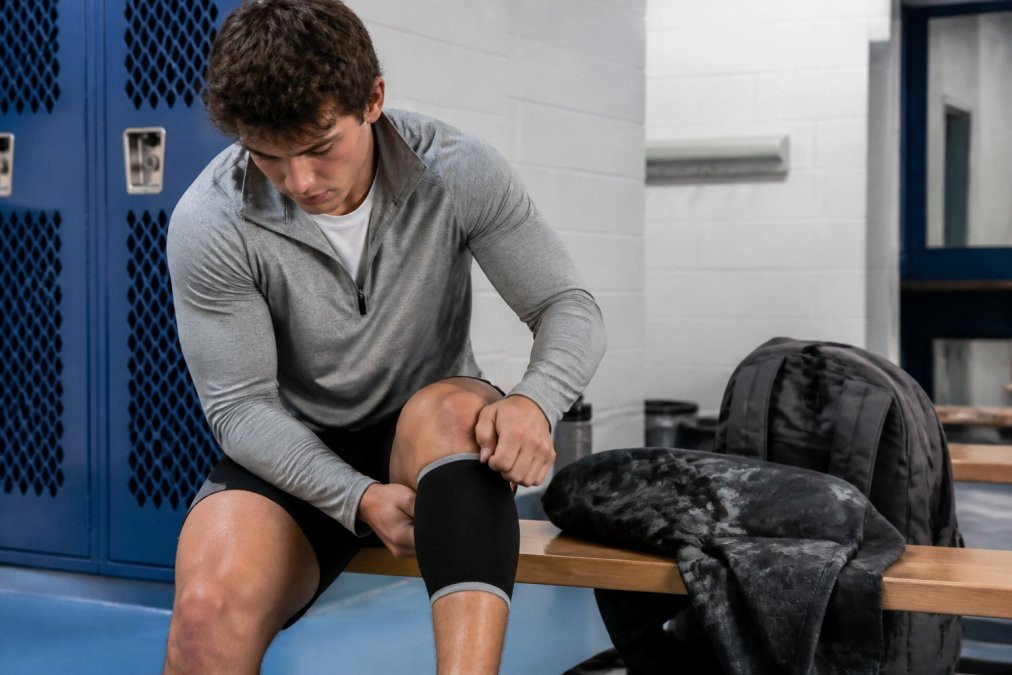
- Kneepads, for mat work and to protect against mat burn during drills.
- Headgear, required in most scholastic competition and protects the ears from friction injuries.
- A gear bag, ventilated or at least easy to air out, so damp gear does not sit sealed overnight.
- A water bottle, hydration matters more than most first-year athletes expect.
That list covers practice and competition without extras. Warm-up layers, outerwear, and a second singlet are upgrades once you know your training schedule and how often you compete.
What Actually Changes as You Improve
The shift from beginner to advanced happens in three areas.
1. Fabric weight and heat management. Beginners can train comfortably in mid-weight blends around 5.5 oz/yd². Competitive wrestlers gravitate toward sub-4 oz polyester because lighter fabric moves sweat off the skin faster and stays cooler across multiple matches in a day. The trade-off: very light fabric can feel less durable, so construction quality matters more as weight drops.
2. Fit precision and compression. Experienced athletes want compression-level snugness because loose fabric gets grabbed and compression supports muscles during repeated explosive movements. Understanding fabric stretch, the Lycra or spandex percentage, becomes useful, not just the size on the tag.
3. Layering systems. Advanced wrestlers build a rotation: a base training shirt, a warm-up layer for cool gyms and travel, and outerwear for cold-weather sessions, adapting to different venues and temperatures without a full second wardrobe.
Material Science: Why Some Gear Costs More
Two singlets can look identical online and perform very differently, usually because of the fiber blend and construction.
- Polyester/Lycra blends stretch and recover, which is why they dominate singlets. Higher Lycra content means more give and a closer fit.
- 100% polyester is common in training tees. It wicks moisture well and dries fast, but it has less stretch than a Lycra blend.
- Cotton-heavy blends feel soft but hold sweat and stay heavy, which is why they are a poor choice for high-sweat training.
- Stitching matters as much as fabric. Double-needle stitching at side seams and hems is the baseline for gear that survives a season of pulling.
- Print method affects longevity. Direct-to-Film (DTF) prints hold color and detail through repeated washing better than cheaper heat-transfer options that crack within weeks.
These differences explain why a $25 training shirt and a $60 singlet are not the same purchase, even if both say "performance" on the label.
The Right Buy Order
None of this requires spending more upfront. It requires buying the right pieces in the right order.
- Start with two quality training shirts and one well-fitted singlet.
- Add kneepads, headgear, and a ventilated bag as your training frequency increases.
- Add warm-up layers and outerwear once you are competing regularly or training in varied venues.
- Upgrade to lighter, higher-compression gear only after you know your fit and your preferences.
A first-year wrestler who follows this order ends the season with gear that still fits, still performs, and did not break the budget. An advanced wrestler replaces gear only when it actually wears out, not because a newer version caught their eye.
Frequently Asked Questions
What should I look for when buying wrestling singlets online?
Check the fabric blend first. A polyester-spandex mix gives the stretch you need for deep stances without losing shape. Look for flatlock stitching to prevent chafing, and confirm the return policy in case the fit is off. For youth wrestlers who grow quickly, size up if you are between sizes rather than risking a too-tight singlet. Moisture-wicking properties matter more than brand names when you are training in warm, humid conditions.
How do I determine the correct size for wrestling shoes?
Wrestling shoes should fit snug but not tight. Your toes should touch the front without curling, and your heel should stay locked when you push off. Measure your foot in the afternoon when it is slightly larger, then compare against the brand's specific size chart. If you wear thick socks, size up half a size. For youth wrestlers, check growth room every few months since shoes that are too big cause blisters and slipping on the mat.
What is the difference between practice and competition wrestling gear?
Practice gear takes the daily grind: repeated washes, mat friction, and heavy sweat. Competition gear is lighter and often more fitted for weigh-ins and matches. You can train in a durable performance tee and switch to a singlet for meets. Many wrestlers keep two sets so competition gear stays crisp. For practice, prioritize breathability and durability. For competition, prioritize fit and moisture management.
How often should I replace my wrestling gear?
Replace singlets and training tees when the fabric loses its stretch, the graphics crack, or seams start fraying, usually after one to two seasons of regular use. Wrestling shoes typically last a full season if you rotate them and let them dry between practices. Kneepads and headgear should be replaced when straps lose elasticity or padding compresses. Check gear monthly for wear, especially during peak season.
Are there specific material requirements for high-performance wrestling apparel?
High-performance wrestling apparel typically uses polyester or a polyester-spandex blend for moisture-wicking and stretch. Look for fabric weights around 3.8 to 5.5 ounces per square yard for breathability without being flimsy. Flatlock seams reduce irritation during matches. For humid climates, lighter fabrics with quick-dry finishes keep you cooler. Avoid pure cotton for competition since it holds sweat and gets heavy.